GCC vs Japanese Imports: What UAE Buyers Should Actually Know
Real differences between GCC and Japanese imports in the Dubai luxury market. Founder's perspective, actual cars we've sold, and the warranty question answered.
"We don't want to own a huge fleet of cars. We prefer to be selective, and the reason is consistent deliverables to our customers. These are people we want to build a relationship with for the long term, so we try to filter as much as possible."
That's how our founder at Xcelerate Motors describes the approach, and after hearing him say it enough times it stops sounding like a sales line and starts sounding like a real constraint on the business. Selective means smaller inventory. Smaller inventory means turning cars down. Turning cars down means the inspection report is doing actual work, not just confirming something everyone already assumed.

Most people walking into a Dubai showroom this year will end up asking the same question. GCC spec or Japanese import? The answer, honestly, depends less on the category than on the particular car in front of you. Both can be great. Both can disappoint. Here's how we've come to think about it after a few years of buying and selling them.
GCC, Explained
GCC stands for Gulf Cooperation Council. Six countries, UAE, Saudi Arabia, Kuwait, Qatar, Bahrain, Oman. A GCC-spec car is built at the factory with this region in mind.
That means AC tuned for 45°C summers. UV-treated paint and interior. Coastal-grade undercoating for the humidity. Factory warranty that your local UAE dealer will actually honour. And because Gulf buyers don't tend to order base trims, most GCC cars that make it onto the used market sit near the top of their range for options.
Base-spec GCC cars are rare compared to other markets. GCC buyers tend to order fully loaded. Dealers know this. When you line up a GCC 2023 G 63 next to a base European-spec version of the same year, the feature gap can look bigger than the price gap. On resale, a GCC luxury car typically holds about 10 to 15% more value than the same model imported from elsewhere.
Japan, Explained
A used car shipped in from Japan. That part is straightforward. What's less well understood, especially for buyers new to the import market, is what Japanese ownership does to a car before it lands here.
"The culture of Japan is a bit different than the culture here. These cars are used basically over the weekend, not for everyday driving. Owners often take public transportation, even the ones who own cars like this. So it becomes a weekend car, and this is why the mileage is low. Regarding the condition itself, the weather, the heat and the sun intensity in Japan is totally different than here in the GCC. On top of that, the owners always park them indoors. This keeps the leather, the plastic, the rubber materials in new condition, which gives the feeling of a car that has never been used."
It's a long answer because it's actually several things at once. Lower weekly use. Cooler climate. Indoor parking. Japan's strict maintenance culture. Stack all of that together and a three-year-old car in Japan can look and drive like it just came out of a dealership. Japanese drivers average 6,000 to 10,000 km a year. In the UAE we're running 15,000 to 25,000. The math of condition over time works in the import's favour.
The Misconception That Won't Go Away
If there's one thing we end up clearing up on repeat, in nearly every first conversation about a Japanese import, it's this.
"One of the biggest misconceptions for UAE buyers in general is that Japanese imports, especially the type of cars we bring from Japan, mostly European super sports cars or high engine performance cars, that mechanically there are certain specs that are different than the GCC, which is absolutely not true. The production that is done for these type of cars is the same worldwide. The only difference that comes is basically the language, the catalog, the printed documents that are sometimes in Japanese versus the ones that are here in Arabic and English. And we always explain this to them, and sometimes they go online and do the check, and they verify that this is true. The AC, the mechanical components, are the same."
Buyers verify. We've had customers sit in the showroom and pull up forums, comparison articles, manufacturer spec sheets. They come back, confirm it, and the conversation moves on. The mechanical spec on a premium car is a global spec. The catalog is what changes.
Two Cars We Sold Recently
Because theory only goes so far, here are two Japanese imports that left the showroom in the last couple of months.
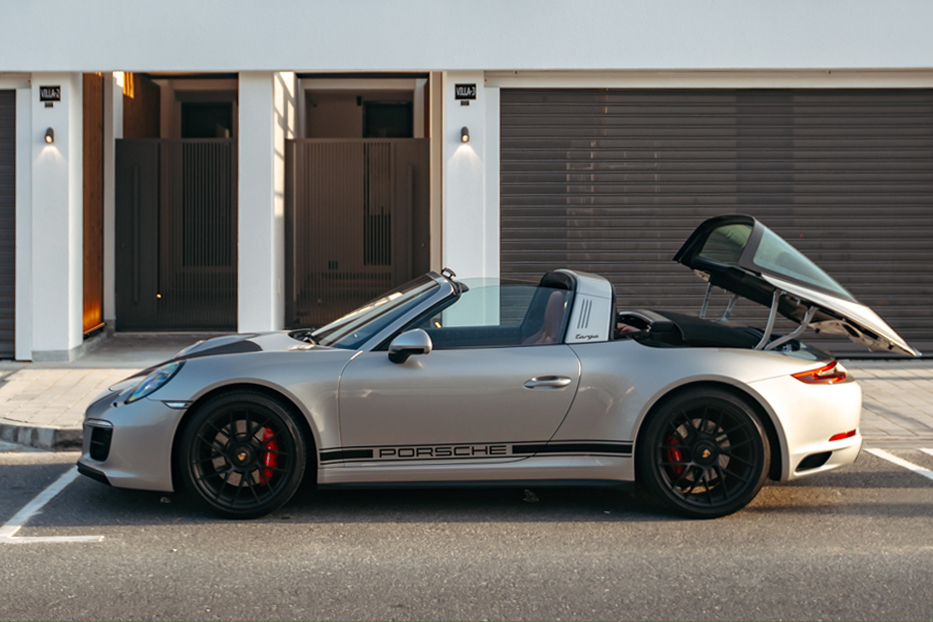
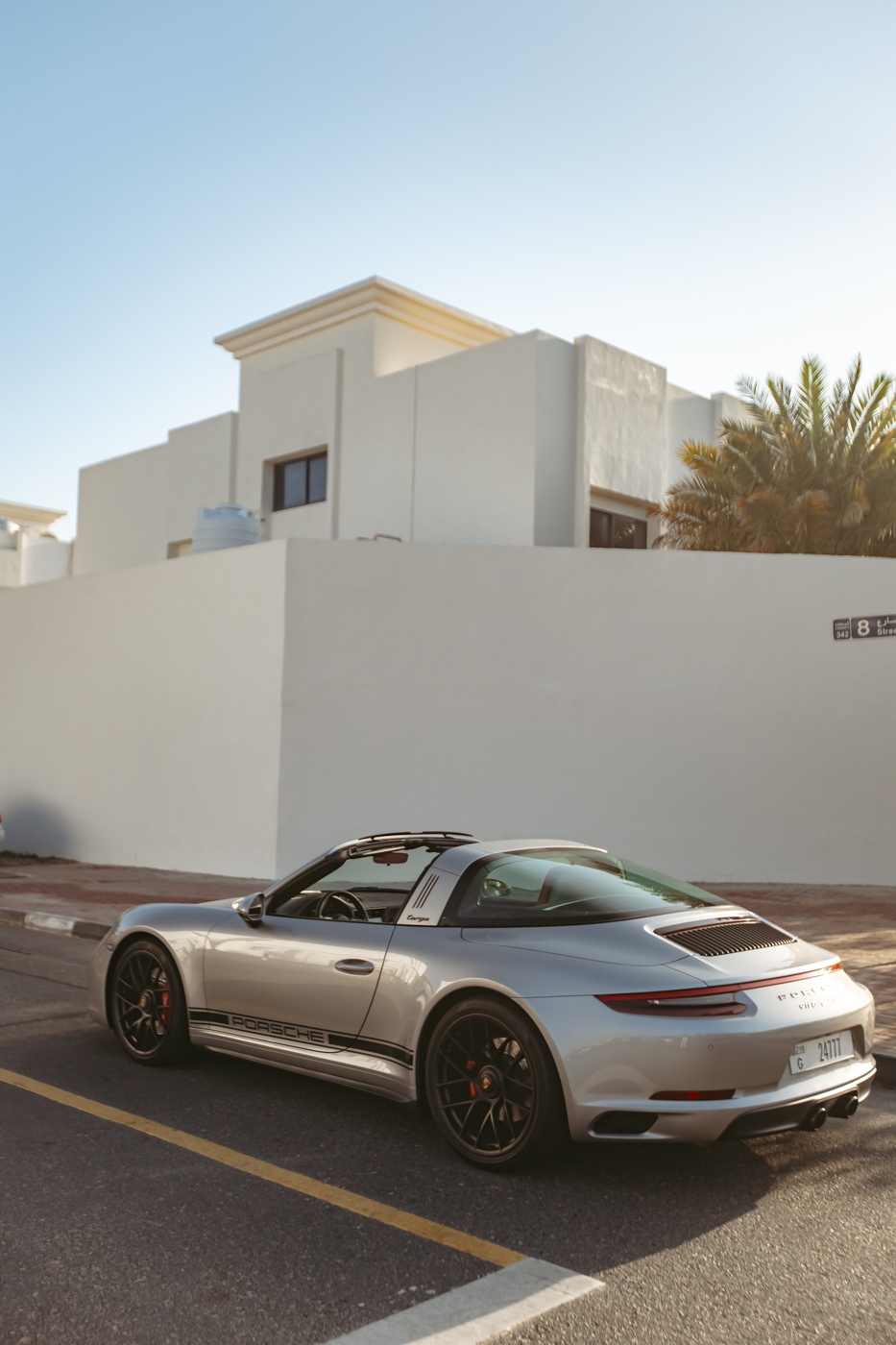
A silver 2019 Porsche 911 Carrera Targa GTS with 44,000 kilometres. Plenty of GCC-spec Targas from 2019 circulate in the Dubai market, and plenty are fine cars, but the Japanese one felt like it had spent most of its life under a cover in a garage. Which, based on what our founder tells us about how buyers in Tokyo treat this kind of car, is probably exactly what happened.

The other was a white 2021 Mercedes G 63 AMG, 22,000 kilometres. Inside and out, the car was, to borrow our inspector's phrase, five over five. Leather holding its factory look. Plastics and rubbers showing no heat brittleness. Exterior paint where it should be. You could put it next to a 2024 showroom car and not feel cheated. Comparable GCC G 63s from 2021 tend to carry noticeably higher mileage, and the ones parked outdoors for four summers show it on the dash, the seats, the window trims.
Both moved quickly. The price was lower than the GCC equivalent. The actual closer was walking around the car.
What Actually Happens With Customers
"Europeans, Russians, Westerners in general, usually when they come in, they already have knowledge about the GCC, that it sometimes has more dealership warranty and so on. But once they come to see a Japanese car, we've noticed they are aware that the condition of the imported Japanese cars is very good. We've never had a situation where somebody was coming for a Japanese and bought a GCC. What has happened a few times is somebody coming to buy a GCC, and then after we explain, or after they witness the condition themselves, they decide to explore or even buy a Japanese import."
That's the pattern, and the flow only ever goes in one direction. People come in assuming GCC is the safer default, and sometimes they do buy GCC, which is completely fine. But nobody in our experience has come in asking for a Japanese import and left with a GCC. The condition advantage is real, and once you see it in person you can't really unsee it.
European and Korean Imports
Worth a paragraph each, because both show up in the market too.
European imports aren't automatically basic. Plenty come in strong specs, particularly ones originally ordered by buyers in Germany, the UK, or wealthier European markets generally. But Europe has a longer tradition of building to budget than the Gulf does, so stripped-down examples circulate more often than they would from Japan. The car itself is usually fine. The specification list is where you want to look carefully before signing anything.
Korean market cars tend toward more basic configurations. Smaller option packages, simpler interiors, sometimes missing features that come standard on GCC and Japanese equivalents. The saving on paper is real, but on a premium car the feature gap often swallows most of it.
Price, Using the G 63 as a Benchmark
The G 63 AMG is what people ask about most often, so it's a useful reference point.
A GCC-spec 2023 G 63 with somewhere between 20,000 and 40,000 km runs around AED 850,000 to 950,000 on the current used market. A Japanese import of the same year with lower miles, say 15,000 to 30,000, tends to land closer to AED 750,000 to 850,000. Call it roughly an 8 to 12% saving for less mileage and very similar spec. The trade-off is no factory warranty, and a slightly softer resale three or four years down the road.
These numbers move. What held in April 2026 won't necessarily hold six months later. Always verify against current listings.
The Warranty Question
This is where most buyers want real answers, and it has more flexibility than is usually assumed.
"For some brands, we are able to activate the warranty at the dealers, which we do always. For the brands that do not activate cars that are not bought by the Middle East brand, we always provide a better option, which is warranty and service contract in a very reputable and honest workshop that we have an agreement with. Most of the time, they know that certain years don't have extension on the warranty or the service contract. So even if it's a GCC car that cannot be extended at the agency, we are able to provide them this kind of service through our partner workshop. It's not a partner in the sense that we collaborate with, it's the workshop that we collaborate with because we share the same values, they are of super high standards, which is Munich Motors."
Which might be the most important paragraph to take from this whole section. The warranty gap isn't just a Japanese-import issue. It's an ownership-age issue. Certain GCC cars past certain years, the manufacturer's agency will stop extending coverage. In those cases we hand customers a service contract through Munich Motors, a Dubai workshop we've come to trust for precisely this kind of situation. Same protection. Different path to it.
Which One Should You Buy?
There isn't a universal answer. There are four useful questions.
Do you plan to sell in three to four years? GCC will give you the cleaner exit on resale.
Do you care about manufacturer warranty specifically at the agency? GCC is simpler, although a Japanese import where we can activate warranty, or one covered by Munich Motors, works almost as well.
Do you want the best condition and lower miles for the money, and are you comfortable with a service contract instead of factory coverage? Japanese is probably the call.
Are you looking at a European or Korean import? Check the exact options on the exact car before you commit. Category tells you less than specification does.
How We Buy
Every car we consider goes through a 150-point inspection before we even decide to buy. If the report surfaces undisclosed repaint, a past accident, or major mechanical work the seller didn't mention, we walk away from the deal. Same standard applies to cars we take on consignment, even though we won't own them.
"We try to filter as much as possible at the buying stage. That's what lets us deliver something consistent to our customers. We're not building volume, we're building relationships that last beyond a single sale."
It's not really a growth strategy. It's close to the opposite of one. But it's how a small selective dealership ends up being the dealership someone sends their friend to.
Current stock at [xcelerate-motors.com/marketplace](https://xcelerate-motors.com/marketplace).
FAQ
Q: Do Japanese imports really have different mechanical specs from GCC?
A: No. Premium cars are produced to the same global spec. The AC, the cooling, the drivetrain, all identical. What changes is the documentation language and the dealer catalog.
Q: What about warranty on a Japanese import?
A: Some brands let us activate warranty at the local UAE dealer. For brands that refuse, and for certain older GCC cars too, we offer a service contract through Munich Motors.
Q: Why are Japanese imports usually in better condition?
A: Lower annual mileage, weekend-only driving for many performance cars, cooler climate, indoor parking. Stacked together, these things keep leather, plastics, and rubbers looking years younger.
Q: Can European imports be well-specced?
A: Absolutely. European specifications vary more than GCC or Japanese because European buyers build to budget. Always check the exact options list, not just the model year.
Q: Which holds its resale value better, GCC or Japanese?
A: GCC, by about 5 to 10% over five years. That gap tends to narrow on well-kept premium cars where buyers care about condition more than origin.